
Room 1
Narrative Figuration. A Parisian Story from the 1960s
Antonio Seguí, Bernard Rancillac, Eduardo Arroyo, Gérard Fromanger Gianni Bertini, Henri Cueco, Jacques Monory, Jan Voss Marco Del Re, Peter Klasen, Peter Stämpfli
Narrative Figuration. A Parisian Story from the 1960s
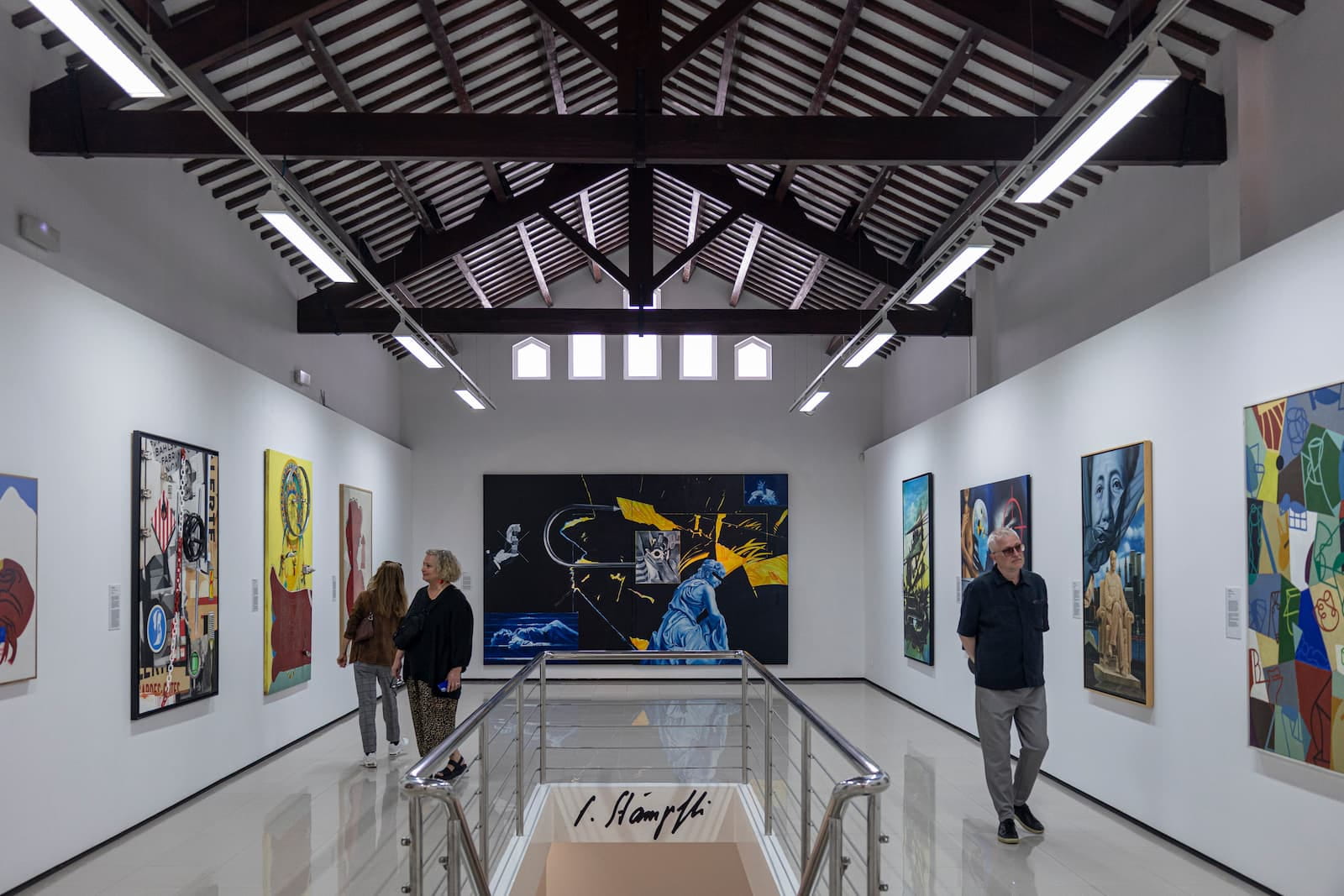
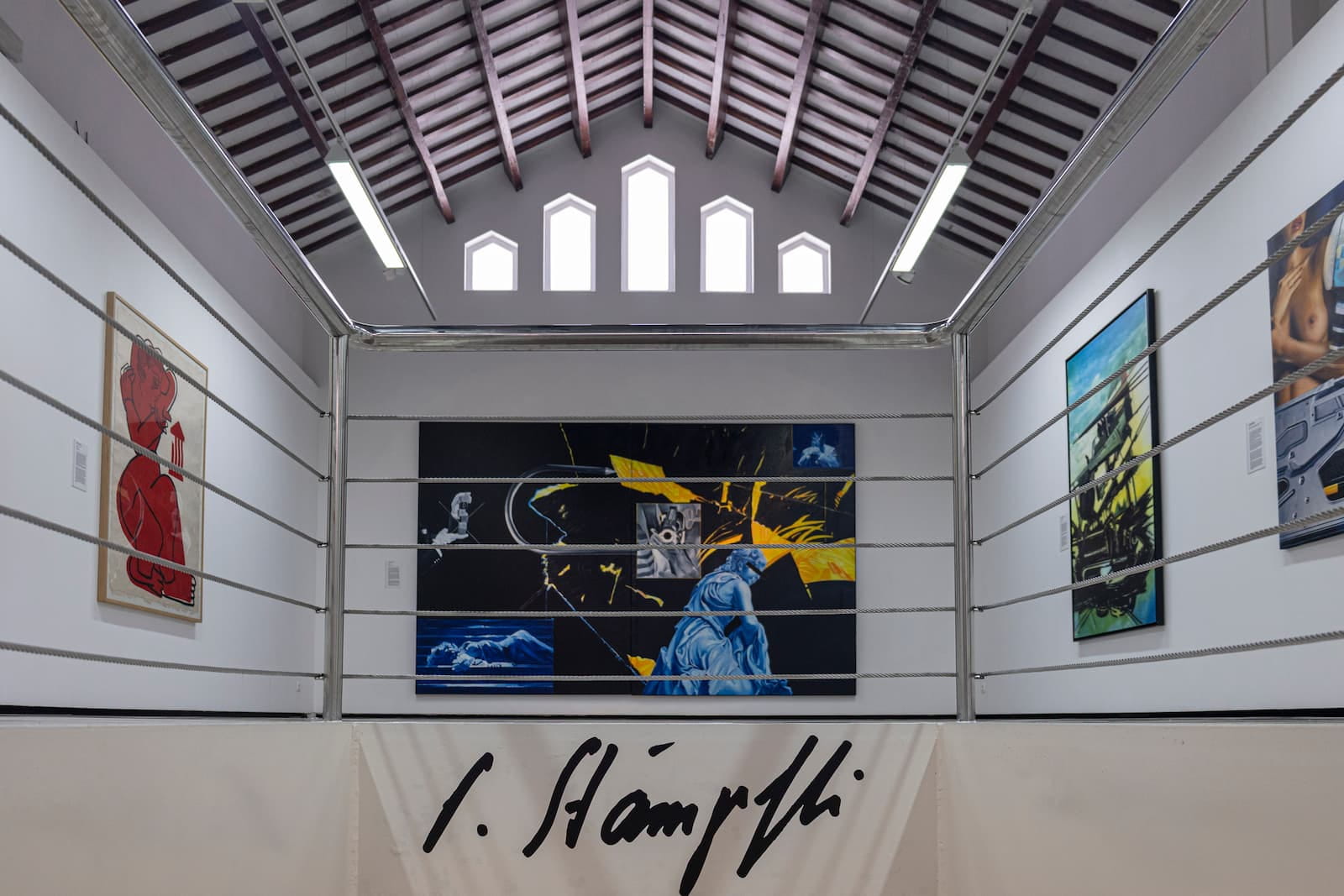
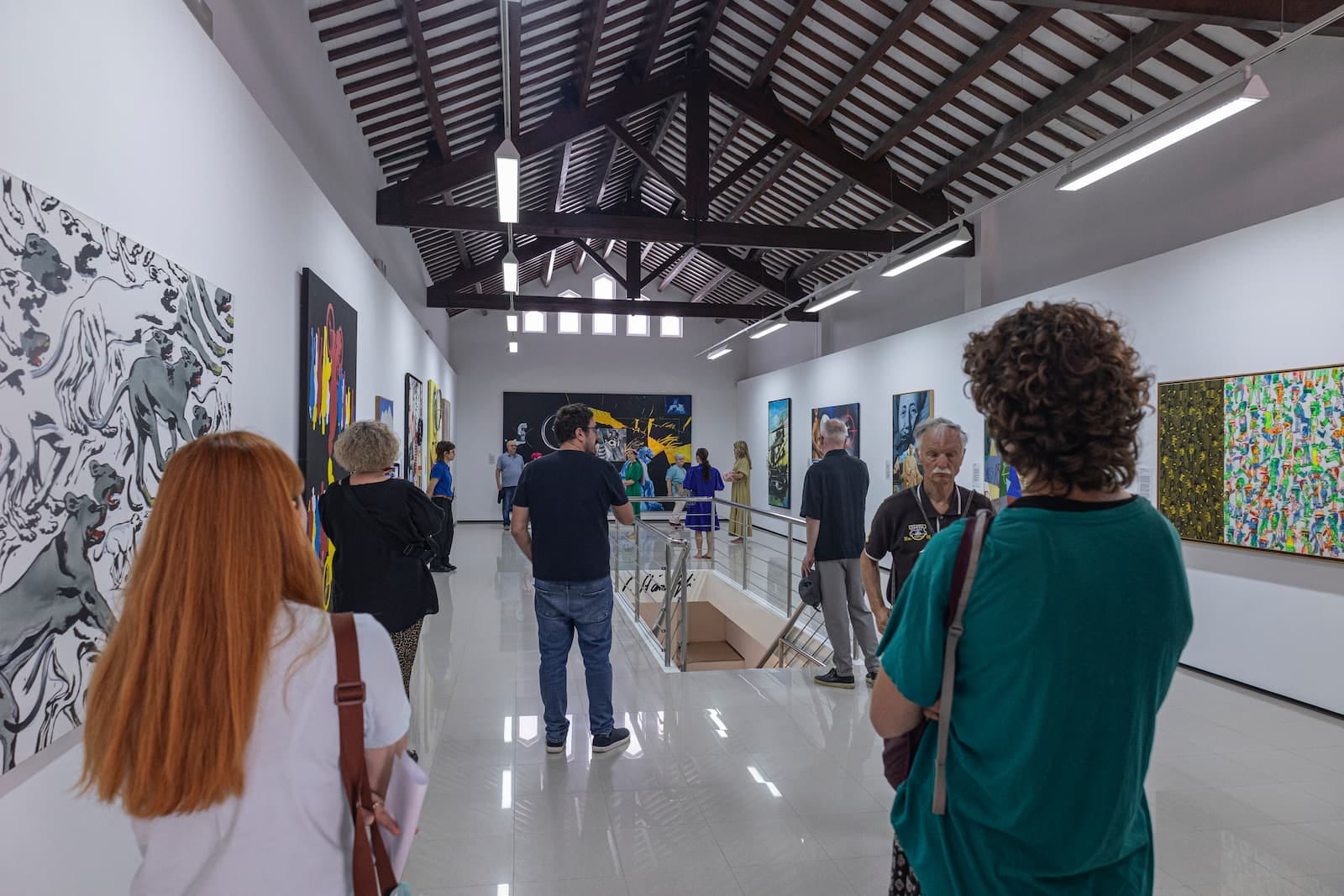
Works by 12 artists of Narrative Figuration, a foundational pillar of the Fundació Stämpfli collection
Eduardo Arroyo / Saint-Bernard Tonnelet
Gianni Bertini / Ruïnes de Tèbes
Henri Cueco / Chiens courant
Erró / Coup de vent
Gérard Fromanger / Sans dessus dessous, tête à tête, rouge, jaune, bleu
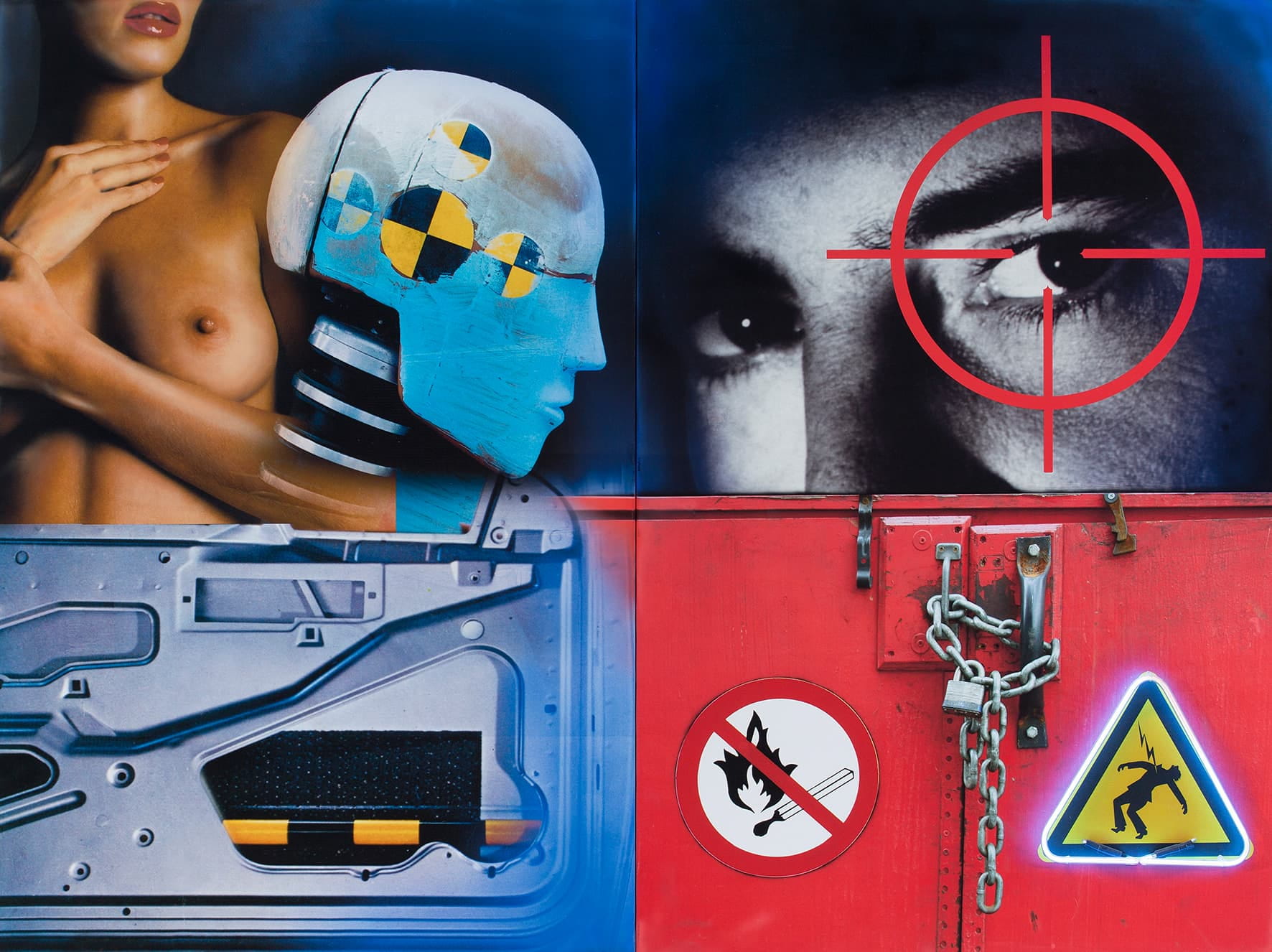
Peter Klasen / The Beauty and the Dummy & 2 volants et chaine, electrified floor
Jacques Monory / ANG, n.5
Bernard Rancillac / Roue de la Connaissance /
Marco del Re / Figure with tool III
Antonio Seguí / Las Rubias al Sol
Peter Stämpfli / Town & Country, n.2
Jan Voss / Verwandlung (Transformació)
Paris, 1950s
When wars end, their effects persist. Paris, after World War II, needed time to free itself from the burden left by the conflict. The abstraction of the so-called School of Paris dominated the art world. Under various names—Informalism, lyrical abstraction or abstract expressionism—the canvases reflected the inner gaze of the artist, invoking meditations or proclaiming intimate wounds through brushstrokes and color patches.
1960
A new generation was moving away from the past to create its place in the future. Paris lived in a libertarian, deeply politicized youth climate, and young artists were ready to break with capitalism and established ways of life. They believed firmly that the artist, as an intellectual, had to make thought the pillar of their work and art a front of artistic and social combat. They resolutely opposed the Cold War, the nuclear threat, colonialism, the violence of the wars in Algeria and Vietnam, as well as the exaltation of consumerist desire.
1964
The exhibition Mitologies quotidianes at the Musée d’Art Moderne de Paris proposed a reinvention of figuration tied to narration, the ancient human form of expression that conveys knowledge, emotions and values through real or fictional events. They were inspired by techniques never before used in art, typical of the media that were renewing the visual universe of large cities: advertising, photo-novels, cinema or comics. For the artists of Narrative Figuration, each work was a scene from a story that challenges the viewer to imagine it.
May 1968
Those young people wanted to change the world by bringing art to the street and the street into art. Narrative Figuration was the beginning of an artistic path that continues to this day, always insisting on the social and political function of the visual image.
2025
If in the 1960s they introduced into painting their version of everyday reality, today’s viewer, saturated with images, must look at it through other prisms, combining the original stories with contemporary readings.
Títol de l’obra