
Room A
1963-1970. Pop-Art and Figuration. The Object and the Everyday Gesture
Peter Stämpfli
1963-1970. Pop-Art and Figuration. The Object and the Everyday Gesture
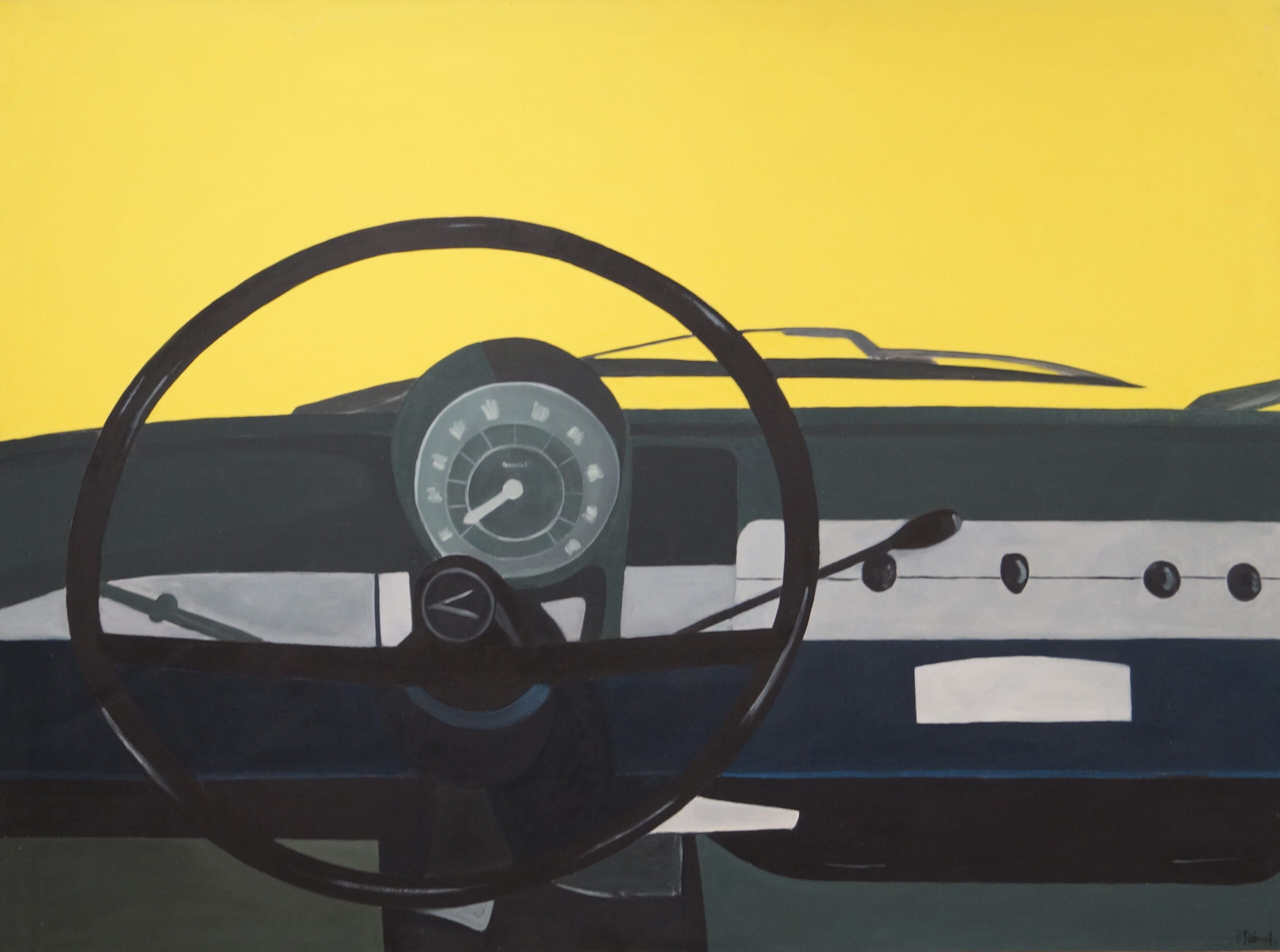
The works displayed in this room summarize the evolution of the first period of Peter Stämpfli’s work throughout the 1960s. They are large-format figurative representations of isolated everyday objects and gestures on a white or monochrome background. The period spans from Autoportrait au raglan (1963) to Wildcat nº2 (1970).
After a short trial phase between 1959 and 1960, influenced by American abstract expressionism, Stämpfli felt a deep need to recover figuration in painting. He found his theme in the objects and gestures of everyday life in the 1960s, a time when the mass production and distribution of consumer goods defined society. He drew inspiration from the large formats of advertising and the languages of popular media.
These are portraits of gestures and objects that radically departed from the emotions of expressionism. The artist’s hand, in the form of brushstrokes or textures, is imperceptible. The images, with great chromatic intensity—for example, Pot-au-feu (1963), Tomate or Moka, both from 1964—remain isolated and immobile, floating on a white monochrome background, with compositions inspired by photography. Stämpfli himself explains the intention: to create “a dictionary of everyday objects and gestures”; to abstract them from the banality of daily life and bring them into the artist’s studio represented through the manual technique of the great pictorial tradition: oil painting.
These works emphasize the criteria that defined modern painting and were the subject of debate among critics of the time: the two-dimensional nature of the artwork, its autonomy, and its objectivity. They resolved, considering them outdated, the opposing and exclusive dichotomies that structured 20th-century painting: high culture versus popular culture, fine arts confronted with daily banality, and finally, abstraction opposed to representation.
It should be noted that Wildcat nº2 (1970, displayed in this room), along with its predecessor Wildcat nº1 (1967), marks the moment when Stämpfli decided the fundamental core of his artistic life until today: after focusing on the automobile, he reduced it to the wheel and ultimately to the tyre and its geometric design.