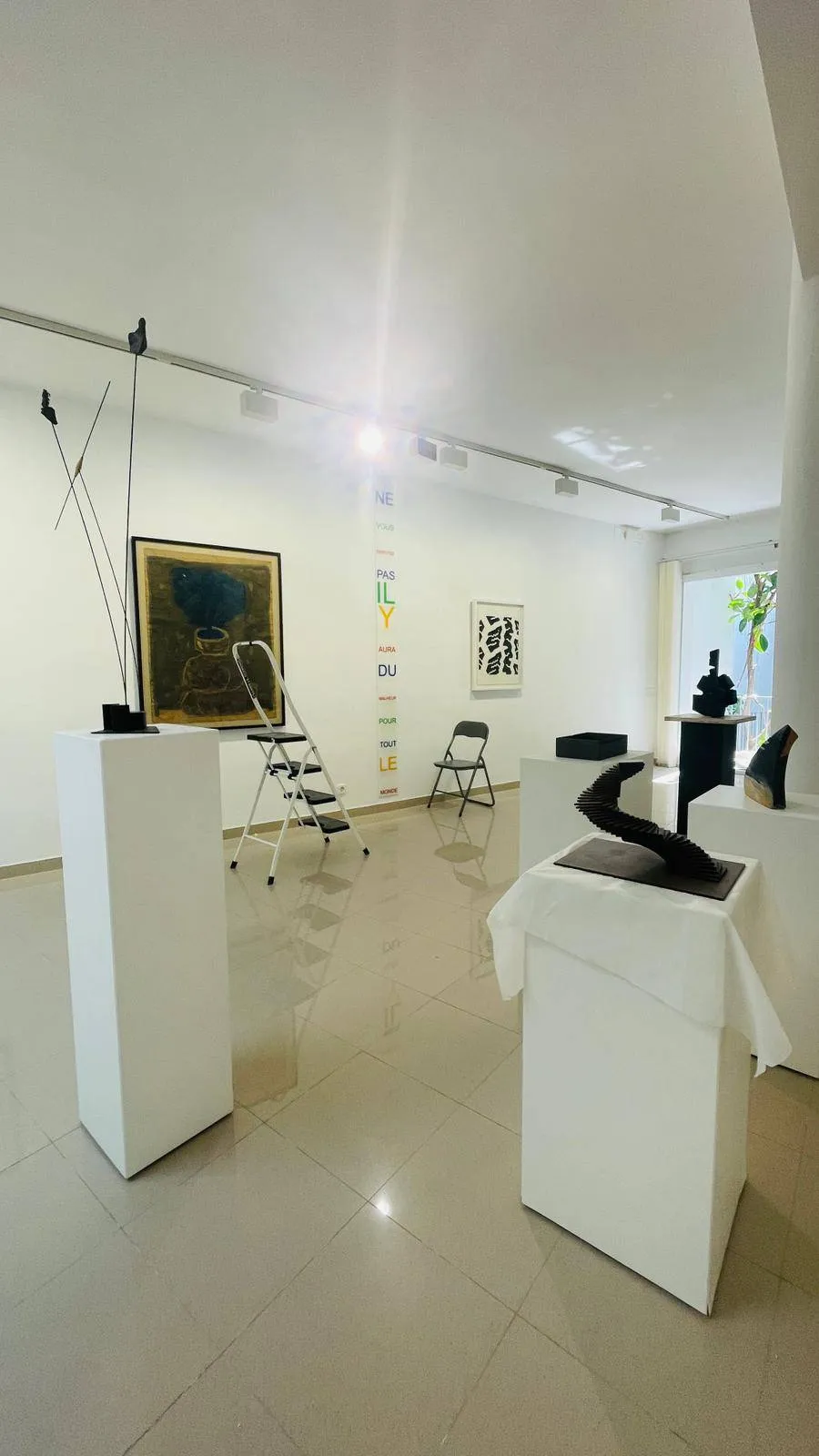

The Stämpfli Foundation will inaugurate its new temporary exhibition this Saturday at 1 p.m. As with the one presented in May of last year, it consists of a simultaneous three-part display. The starting point, in Room 1, is a revisiting of the artistic effervescence of Paris in the 1960s. This historical context is complemented, in Room 2, by a recreation of the imprint that Peter Stämpfli created for his 1980 exhibition at the Centre Pompidou in Paris and, in Room 3, by a selection of works from the Foundation’s own collection.
The guiding thread of the Foundation’s new three-part exhibition attempts to answer the question: where do images lead us?. In Paris, throughout the 1960s —and especially after May ’68— artists deeply questioned the image and its very definition.
In a context of major social and political transformations, some artists, such as those of Narrative Figuration, turned painting into a critical tool. Their works denounced the tensions of the contemporary world: consumerism, the Cold War and colonial conflicts. Others, however, rejected the image as narrative or message. They reduced painting to essential, repetitive and almost anonymous forms, turning it into a literal presence. Between these two poles, multiple paths emerged: painting was dismantled, analysed and reinvented. Materials, supports and gestures became the centre of experimentation.
Rather than opposing styles, the new exhibition of the Stämpfli Foundation presents a moment of intense transformation —a time when painting, figurative or not, was questioned and redefined. A process that, even today, remains open.